Is There a Subway Station at Guangzhou Haxi Clothing City? A Local Shopkeeper's Honest Take
Welcome to the real deal. I've been standing in the Xizhai (Station West) district of Guangzhou for over twenty years, watching trucks come and go, seeing styles rise and fall like tides. You are asking about "Guangzhou Haxi Clothing City" and whether it has a subway station. Let me stop you right there with a friendly, straight-from-the-heart correction: Haxi is not in Guangzhou.
If you are looking for the legendary wholesale hub that connects the world to Chinese manufacturing, you are thinking of the Guangzhou Xizhai Clothing Market area, specifically around the Railway Station. "Haxi" usually refers to a district in Harbin, China, which is thousands of kilometers away from the fashion capital of Guangdong. This confusion is common among new overseas buyers who rely solely on Google Maps without local context. But don't worry, because if your goal is to source high-quality Guangzhou Xizhai clothing, Xizhai foreign trade, or goods from the famous Jinbao Foreign Trade market, you are actually talking about the exact same place I call home. The good news? Yes, this entire chaotic, vibrant ecosystem is perfectly served by the metro system, but not directly under the name "Haxi."
The Real Location: Where the Action Actually Is
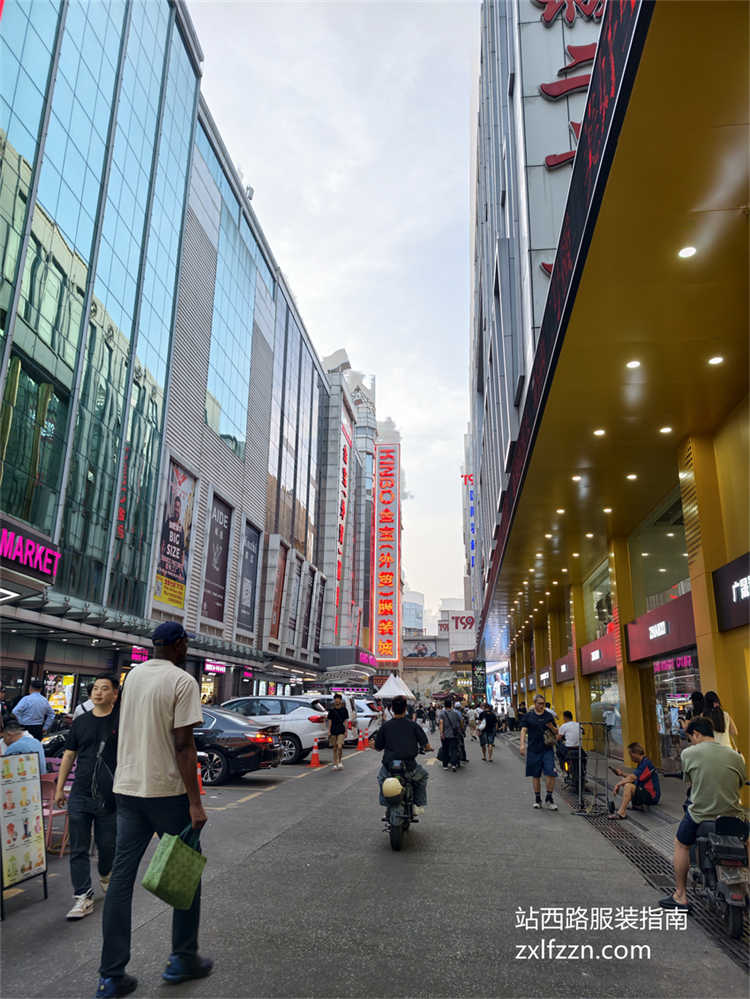
Let's clear up the geography first so you don't waste your flight time. The core of the Guangzhou Xizhai clothing wholesale scene is centered around the Guangzhou Railway Station. The nearest and most convenient subway station is Railway Station (Tiyu Xilu Line 2 / Line 5). When you step out of Exit B or C, you are literally walking into the heart of the beast. You will see rows of buildings packed with clothes, neon signs flashing, and porters carrying massive bags of fabric. This is where the Guangzhou Xizhai foreign trade giants operate.
I remember my first year here, trying to find a specific factory outlet near what I thought was "Haxi." I ended up lost in the back alleys of Liuhua District, sweating through my shirt, only to realize I was three kilometers off. If you search for "Guangzhou Xizhai clothing," you will find the cluster of markets including Baoma, Jinbao, and the massive Tianma complex. These are all within a 10-minute walk from the subway exit. The infrastructure here is built for speed, not comfort. It's loud, it's crowded, and it moves fast.
Navigating the Markets: From Metro to Factory Floor
once you get off at the Railway Station, do not expect a polished mall experience. This is industrial-scale commerce. My advice? Wear comfortable shoes and bring a small backpack. Your hands need to be free to feel the fabric and check the stitching. The layout of these markets can be confusing for outsiders, but once you know the flow, it's a maze of opportunity.
Spotting the Hidden Gems in Jinbao and Baoma
You mentioned Jinbao Foreign Trade in your query, and that is a smart starting point. Jinbao is known for its slightly higher-end foreign trade goods compared to the budget bins elsewhere. When you enter Jinbao, head straight to the upper floors. The ground floor is often filled with tourists and low-margin knock-offs. The real action—the Guangzhou Xizhai clothing that sells well in Europe and the US—is on floors 3 and 4.
Here is a specific tip from my decades of experience: Look for shops with no English signage but have stacks of international brand tags inside. That is the sign of a genuine Xizhai foreign trade supplier. For example, on the 4th floor of Jinbao, there is a row of stalls run by families who have been sourcing cotton blends since the 90s. They don't speak much English, but they show you samples instantly. One specific stall, often marked with a red banner, specializes in oversized denim jackets that are currently trending in New York and London. They don't have a website; they just have a WeChat QR code and a phone number. That is how you find the best deals.
The Art of the Deal: Negotiating Like a Pro
When you finally find a supplier, the negotiation starts immediately. In the Guangzhou Xizhai clothing market, the price you see on the tag is rarely the price you pay. It's a dance. I always start by asking for the "wholesale price" (Baojia), not the retail price. If you ask for retail, they will quote you double.
Here is a hard truth: Quality varies wildly even within the same building. I once saw a buyer order 500 units of a "premium" silk blouse from a stall in Tianma, only to receive thin, synthetic material upon arrival. The lesson? Never order based on a photo. Always ask to see the "master sample" (Yangban). Insist on touching the fabric yourself. Check the hem, the buttonholes, and the lining. In the Xizhai foreign trade sector, a $2 difference per unit can mean the difference between a profit margin of 20% or a loss of 10%. Don't be afraid to walk away. If a shopkeeper gets angry when you inspect the goods, walk. That means they are hiding something.
Common Pitfalls and How to Avoid Them
As a local who has seen hundreds of overseas buyers make mistakes, I want to share some critical warnings. The biggest trap is assuming everything is ready to ship. Many stalls in the Guangzhou Xizhai clothing area are just showrooms. The actual production happens in factories in Foshan or Dongguan, sometimes hours away.
Understanding Lead Times and MOQs
Do not expect next-day delivery unless you are buying stock lots (Cunkuo). For custom orders, the lead time is usually 7 to 15 days. If someone promises you 3 days, they are lying. Also, Minimum Order Quantities (MOQs) are strict. In the Jinbao Foreign Trade market, you might find an MOQ of 50 pieces per style, but in the deeper wholesale zones, it could be 200. Always clarify this before you commit. I once had a client try to order 10 pieces of a custom design, and the shopkeeper laughed them out. He said, "We are a factory, not a boutique." Stick to the rules of the market.
Payment and Logistics
Never pay via personal bank transfer without a contract. Use Alipay or WeChat Pay with a verified business account, or better yet, use a third-party escrow service if you are ordering large quantities. For logistics, the markets have their own freight forwarders. They can handle shipping to any port in the world. However, be careful with the "all-inclusive" quotes. Sometimes the shipping cost excludes customs duties or insurance. Ask for a breakdown. I recommend using a local agent who knows the Guangzhou Xizhai clothing export process inside out. They can help you consolidate goods from different stalls into one container, saving you a fortune on shipping fees.
Summary Table: Quick Reference for Overseas Buyers
| Feature | Details | Local Tip |
|---|---|---|
| Nearest Subway | Railway Station (Line 2/5) | Exit B leads directly to the main market clusters. |
| Key Markets | Jinbao, Baoma, Tianma | Jinbao for foreign trade; Baoma for volume. |
| Best Time to Visit | Morning (9 AM - 11 AM) | Avoid weekends; suppliers are busy restocking. |
| Payment Method | WeChat Pay / Alipay / Bank Transfer | Always verify the business license before paying. |
| MOQ Expectation | 50-200 pieces per style | Negotiate lower MOQs for mixed styles. |
Final Thoughts: Trust Your Instincts
So, to answer your original question again: There is no "Haxi Clothing City" in Guangzhou, but the Guangzhou Xizhai clothing market is real, accessible, and waiting for you. The subway station at the Railway Station is your gateway. once you step off, leave the tourist mindset behind. Come with a notebook, a sharp eye, and a willingness to negotiate. The Xizhai foreign trade scene is not for the faint-hearted, but for those who take the time to understand the rhythm of the market, the rewards are immense.
I have seen many buyers fail because they tried to rush. They wanted to buy everything in one day. Instead, spend three days. Day one: Explore. Day two: Sample. Day three: Negotiate and finalize. The Jinbao Foreign Trade market and the surrounding stalls are full of hidden treasures, but they only reveal themselves to those who respect the process. Remember, the best deals are not found online; they are found shaking hands in a crowded hallway, feeling the texture of the fabric, and building a relationship that lasts beyond a single transaction. Welcome to Guangzhou. Let's get to work.