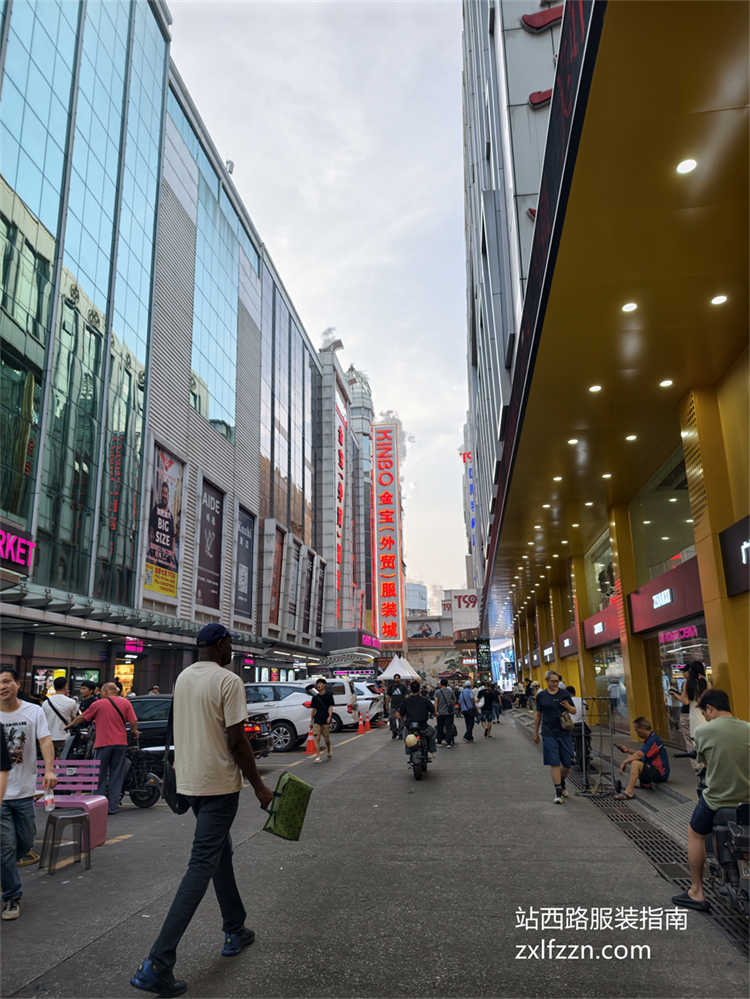
Why I've Been Selling at Jinbao for 15 Years: The Real Deal on Guangzhou Station West Sourcing
Listen, I've been standing behind the counter in this exact spot at the Jinbao Foreign Trade Clothing City since before most of you were even born. While everyone is obsessed with Taobao and cross-border e-commerce apps, I still see thousands of foreign buyers walking through those heavy metal doors every single week. They come looking for "cheap Chinese clothes," but what they actually need is a roadmap to the real supply chain. If you are hunting for Guangzhou Station West clothing or specifically looking for high-quality Jinbao foreign trade items, you have to understand that this isn't a shopping mall. It's a battlefield of margins, logistics, and trust.
The Myth of the "One-Stop Shop"
Many first-timers think they can walk into Jinbao, find one shop, and buy everything from t-shirts to winter coats. That is a rookie mistake. The reality of the Guangzhou Station West market is that specialization is king. In my experience, the best deals aren't found by browsing; they are found by targeting specific floors and specific lanes. For instance, if you want fast-fashion basics, you go to the lower levels where the turnover is insane. If you are looking for premium export quality garments, you need to head to the upper floors where the showrooms are cleaner and the fabric quality is strictly controlled.
Navigating the Labyrinth: How to Find the Right Stall Without Getting Lost
When I first started, I spent three days just trying to find the exit. The layout of Jinbao is confusing by design. But after fifteen years, I know exactly where the gems are hidden. Let me give you a concrete example. If you are sourcing denim, do not waste your time on the ground floor. Go straight to the third floor, specifically around Lane 305 to 310. There, you will find stalls like "Golden Star Denim" (a long-time fixture) that specialize in raw selvedge jeans for export. They don't have flashy signs, but their stock is fresh off the loom.
Reading the Room: Visual Cues Matter
You need to learn to read the environment. A stall with piles of clothes on the floor usually means they are clearing out old stock—great for liquidation, terrible for consistent quality. However, a stall with neatly folded stacks, mannequins dressed in the latest styles, and a manager who speaks broken English but knows the specs perfectly? That is your target. At Jinbao, we call these "Showroom Stalls." They are slightly more expensive per unit than the warehouse stalls, but the return rate is near zero. When I source for my regular clients, I always prioritize these spots because the consistency is what keeps them coming back.
The Art of Negotiation: Beyond the Price Tag
This is where most foreigners fail. They ask, "How much?" and the seller says, "$5." Then they try to haggle down to "$4." Stop right there. In the Guangzhou Station West ecosystem, price is just the entry fee. The real negotiation happens on MOQ (Minimum Order Quantity), payment terms, and lead time. I once had a client from Brazil who tried to order 50 pieces of a jacket at $8 each. I told him no. He was shocked. I explained that at this volume, the factory would use inferior thread to save costs. Instead, I offered him a deal: 200 pieces at $9.50, with free custom labeling included. He took it, and six months later, he sent me a video of his store selling out. That is the power of understanding the supply chain.
Real data: Factory Direct vs. Middleman
Let's talk numbers. A typical middleman in the market might quote you $12 for a cotton blend shirt. If you dig deep enough to find the actual factory representative inside Jinbao, that same shirt might be available for $7.50. But here is the catch: the factory rep often requires an MOQ of 300 units. The middleman accepts 50. So, which is better? It depends on your strategy. If you are testing a new brand, pay the middleman. If you are scaling, cut out the middleman. I have a contact, "Jinbao Textile Hub" on the 4th floor, who works directly with factories in Dongguan. They handle the QC and shipping. Their markup is only 15%, whereas the average reseller markup is 40%.
Quality Control: The only Thing That Saves Your Reputation
I cannot stress this enough: never ship without checking. In the Jinbao foreign trade world, "same style, different quality" is a common phrase. Two stalls might sell the exact same dress pattern, but one uses polyester that pills after two washes, while the other uses a high-grade blend. You must physically touch the fabric. Check the stitching density. Look at the zippers. Are they YKK or generic? In my 15 years, I've seen too many buyers get burned because they trusted a photo. Photos lie; hands-on inspection tells the truth.
The "Sample First" Rule
My golden rule for every buyer is simple: Never place a bulk order without a sample. Even if the sample costs $20, it is worth it. I remember a case where a client ordered 1,000 hoodies based on a picture. When they arrived, the lining was scratchy and the print faded immediately. They lost $5,000. If they had paid for a sample first, they would have caught the issue. Always ask for a "pre-production sample" before the mass production starts. This ensures the factory understands your specific requirements regarding color, size, and material.
Logistics and Shipping: Getting Your Goods Out
once you have picked your goods, the next challenge is getting them out of China. Many buyers think they can just mail it via DHL. Don't do that unless you are sending a few samples. For bulk orders, you need a freight forwarder. Most stalls in Jinbao have relationships with local forwarders who can consolidate your goods from multiple vendors. I recommend using a forwarder who specializes in Guangzhou Station West exports. They know how to pack efficiently to avoid customs issues. Also, always declare the correct value. Under-declaring might save you some tax now, but it risks your entire shipment being seized later.
Payment Security
Never pay 100% upfront unless you have a long-standing relationship. The standard practice in the market is 30% deposit, 70% before shipment. Use Alipay or WeChat Pay for small transactions, but for larger orders, insist on a bank transfer with clear terms. I have seen scams where the seller takes the money and disappears. Protect yourself by meeting in person, verifying their business license, and keeping all communication records.
Summary: Your Action Plan for Success
To wrap up, sourcing from Jinbao is not about luck; it is about preparation. Here is a quick checklist based on my years of experience:
| Step | Action Item | Pro Tip |
|---|---|---|
| Preparation | Define your budget and MOQ | Bring a measuring tape and a fabric swatch book. |
| Location | Target specific floors/lanes | Focus on Floors 3-4 for premium export quality. |
| Selection | Inspect physical samples | Check stitching, zippers, and fabric weight. |
| Negotiation | Bargain on MOQ and terms | Avoid low prices; focus on value and consistency. |
| Logistics | Use a reliable forwarder | Consolidate shipments from multiple stalls. |
If you follow this path, you will find that the Guangzhou Station West market is not a maze of traps, but a treasure trove of opportunity. The key is to treat it like a business, not a tourist attraction. Come with eyes open, hands ready, and a willingness to learn. That is how you win in the Jinbao foreign trade game.