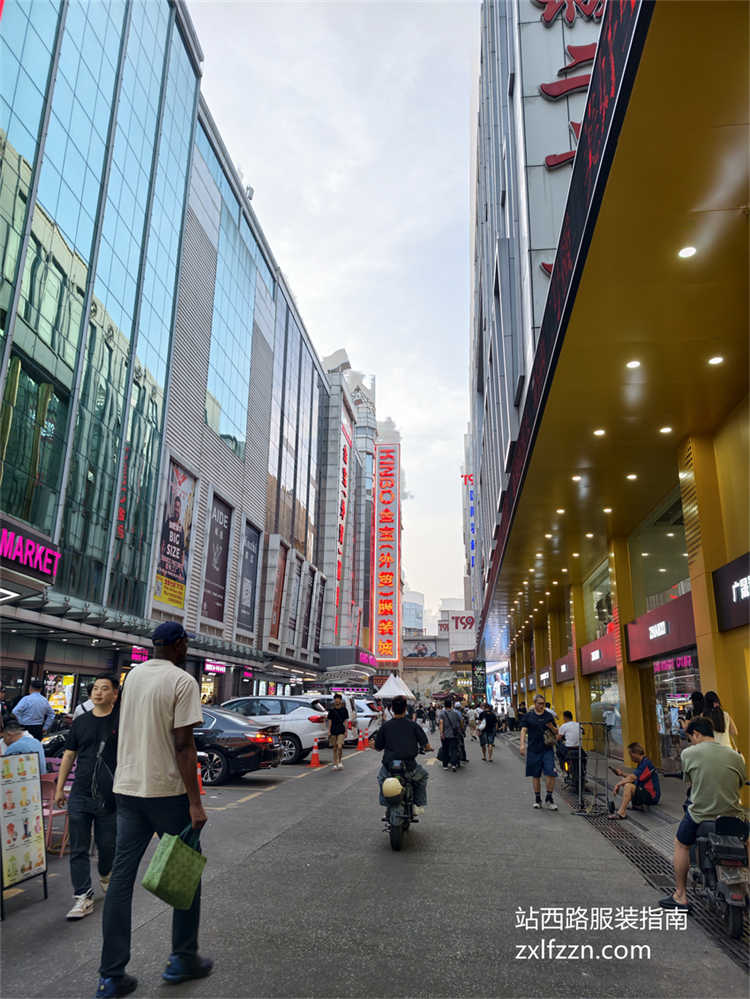
Why I've Been Selling at Jinbao for 15 Years: The Real Story of Guangzhou Station West
I have stood behind the same counter in the Jinbao Jingdu Foreign Trade Clothing City for over a decade. While new buyers often rush into the Guangzhou Station West market with high hopes and tight budgets, they usually get lost within the first hour. They think they are looking for "cheap clothes," but what they actually need is a supply chain that doesn't collapse when quality checks fail. I am not a corporate PR agent; I am an old shop owner who has seen thousands of foreign traders come and go. Today, I want to share exactly how to navigate the Jinbao Foreign Trade market without getting ripped off.
The Myth of "Foreign Trade" vs. Reality
Many overseas buyers confuse "Guangzhou Station West clothing" with high-end designer replicas. Let me be clear: Jinbao Jingdu is not about selling fake luxury bags or shirts with stolen logos. That is illegal and dangerous. What we sell here is genuine surplus from factories that produced for major international brands, or high-quality OEM goods where the brand label was removed due to minor defects or order cancellations. When you hear terms like "Station West foreign trade" or "Jinbao foreign trade," you are hearing about authentic inventory that offers incredible value because it bypasses the marketing costs of big brands. If you walk in expecting $500 Gucci jackets for $20, you will leave empty-handed. But if you look for premium cotton tees that cost $8 to make and sell for $15, that is where the real business happens.
How to Spot the Good Stalls Before You Even Walk In
The biggest mistake I see is buyers wandering aimlessly. The market is huge, and the layout can be confusing. You need a strategy before you step off the elevator. At Jinbao, the floor plan matters more than you think. The lower floors (Ground to 2nd) are mostly for fast fashion and low-margin items, while the upper floors (3rd to 6th) house the serious wholesalers dealing in higher quality fabrics and better construction.
Reading the Signs: Quality Indicators
When you approach a stall, do not just ask "How much?". Look at the hangers. Are the clothes folded neatly or thrown in a pile? A good stall owner in Jinbao keeps their best stock organized. Notice the fabric tags. If they are all missing, it's likely pure surplus. If they are present but generic, it might be a re-tagged factory run. I once had a client from Brazil who bought 500 units from a stall on the 4th floor because the price was too good. He didn't check the stitching density. Two weeks later, he returned because the seams burst after one wash. That is why I always tell my partners: touch the fabric. Feel the weight. Pull the seam. If it feels flimsy, it won't survive shipping or washing.
Negotiation Tactics: Getting the Real Wholesale Price
Price negotiation in Guangzhou Station West is an art form. The sticker price or the first quote you get is rarely the final price. It is a starting point. Here is the truth: if you ask for the price of one piece, you will pay retail. To get the "Jinbao wholesale price," you must show you are a buyer, not a tourist.
The Volume Game and Mixed Styles
Let's talk numbers. Most stalls in Jinbao require a Minimum Order Quantity (MOQ). For basic T-shirts, the MOQ might be 50 pieces per style. For complex jackets, it could be 20. However, smart buyers mix styles. If you buy 10 different styles with 10 pieces each, many owners will accept this as a "mixed lot." This is crucial for small importers. I remember a trader from Canada who wanted to test the market. He didn't have capital for 500 units. He went to three different stalls on the 5th floor, negotiated a mixed bag deal, and got his first shipment of 150 units across 15 styles. He saved money on shipping and diversified his risk. Never be afraid to say, "I am testing the market, give me a trial batch." Honest suppliers will respect that.
Quality Control: The Step Most Buyers Skip
This is where most deals go wrong. You agree on the price, you pay, and then you wait two months for the goods to arrive. By then, the damage is done. In the physical world of Guangzhou Station West, you have the power to inspect before you pay. Do not rely on photos sent via WeChat. Photos can be edited; reality cannot.
The On-Site Inspection Checklist
When I guide my clients through the Jinbao market, I make them follow a strict checklist. First, check the color consistency. Sometimes a dye lot changes between batches, leading to shade variations. Second, check the size chart. Chinese sizing runs smaller than US or EU sizes. A "Large" in China might fit like a "Medium" in America. Always measure a sample yourself. Third, check the packaging. If you are importing for resale, the polybags must be sturdy enough to prevent tearing during transit. I once saw a buyer save thousands by refusing to take a shipment because the plastic bags were too thin. The supplier agreed to replace them immediately because I insisted on seeing the packing process. Trust your eyes, not your gut feeling.
Specific Recommendations: Where to Find the Best Goods
You asked for specific locations. I will give you names and floors based on my experience. If you are looking for high-quality knitwear and sweaters, head to the 4th floor. Specifically, look for the stall named "Golden Thread Textiles" near the central staircase. They specialize in wool blends and have been there for 12 years. Their MOQ is flexible, and their quality control is strict. If you need casual wear and denim, go to the 3rd floor, aisle B. There is a stall called "Urban Denim Factory Direct." They produce jeans for several European brands and sell the surplus here. Their prices are competitive, often 30% lower than similar items in other districts.
Avoiding the Trap Shops
Be careful of stalls that scream "Factory Direct" but have no actual factory connection. These are middlemen trying to pass themselves off as manufacturers. How to spot them? Ask for their factory address. If they hesitate or say "we have multiple branches," they are likely resellers. Also, avoid stalls that only speak English fluently without any local context. Real factory owners in Guangzhou often struggle with perfect English but know their product inside out. The ones who speak perfect English might be agents charging a commission fee hidden in the price.
Summary of Key Takeaways for Overseas Buyers
To wrap up, sourcing from Jinbao Jingdu Foreign Trade Clothing City requires patience, knowledge, and a sharp eye. It is not a place for impulse buying. It is a place for building long-term relationships. Here is a quick summary of what you should focus on:
| Focus Area | Key Action | Common Pitfall to Avoid |
|---|---|---|
| Location Strategy | Target Floors 3-5 for quality | Sticking to Ground Floor for cheap junk |
| Negotiation | Propose mixed lots for lower MOQs | Buying single items at full price |
| Quality Check | Measure samples and check stitching | Relying solely on WeChat photos |
| Supplier Vetting | Ask for factory location and visit | Trusting "perfect English" speakers blindly |
Remember, the goal is not just to find the cheapest clothes, but to find reliable partners who understand your market needs. The Guangzhou Station West market is a living ecosystem. It changes every day, but the principles of quality and trust remain constant. If you follow these steps, you will not just be another tourist; you will be a savvy buyer who knows exactly where to go in Jinbao to get the best deals.