Why the Station West Market is Your Secret Weapon for Global Sourcing
Listen, I've been standing in this concrete jungle of Guangzhou's Liwan District since before most of you were even born. You might know me as just another vendor at the Station West Clothing City, but to my regulars from Europe, America, and the Middle East, I'm the guy who knows exactly which door opens when the security guard isn't looking. If you are searching for China Guangzhou Liwan District Station West Clothing City address, you aren't just looking for a map coordinate; you are looking for the heartbeat of global fast fashion. Let me tell you something the big logistics websites won't: the real value isn't in the building itself, it's in the chaos outside the doors.
I see so many foreign buyers walking into the market with their iPads, expecting to find "Made in China" tags on everything like they do in Shanghai or Shenzhen. They get confused when they walk into a shop in the Guangzhou Station West clothing district and see piles of fabric, unfinished garments, and workers sewing right there on the floor. That is the reality here. This is where the Station West foreign trade ecosystem thrives. It's not about polished showrooms; it's about speed, volume, and the ability to pivot your order size from 50 pieces to 5,000 overnight. When you stand here, you aren't buying clothes; you are buying supply chain agility.
Navigating the Labyrinth: Where Exactly Are We?
The Real Location vs. The Map Pin
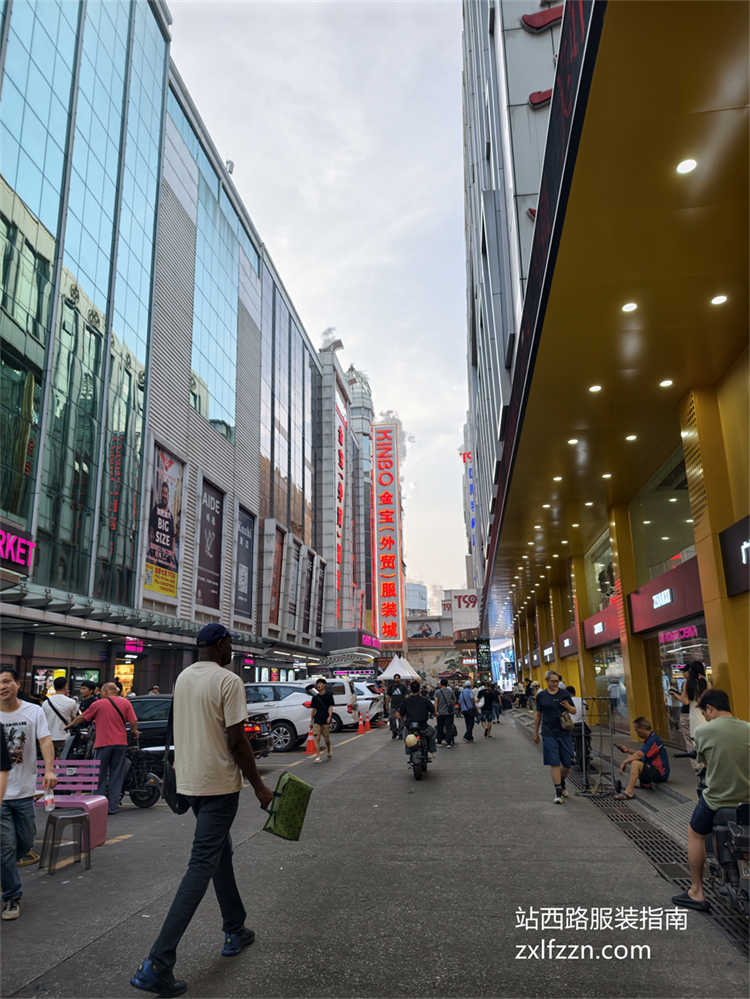
First things first, let's clear up the confusion about the address. Most GPS apps will drop you near the railway station, but the actual market complex is a sprawling network of buildings that feels more like a city than a mall. The core hub is centered around the intersection of Huanshi West Road and Jiefang North Road. However, if you want the specific Guangzhou Station West clothing wholesale experience, you need to head straight for the Baoyin Building (Baojin) area. This is the crown jewel of our district.
When I tell my overseas clients to come to Baojin Foreign Trade, I mean the multi-story structure that looks a bit worn on the outside but is packed with high-end factories inside. Don't be fooled by the street-level shops selling cheap knockoffs; the real money and quality are on floors three through six. I remember a client from Brazil last year who got lost trying to find a specific factory because he was looking at the main entrance. He ended up missing his flight because he spent four hours wandering the wrong alleyways. My advice? Get off the bus at the "Jiefang North Road" stop, cross the street, and look for the blue signboards pointing towards the "Clothing Wholesale Center." That is your starting point.
The Layout of Power: Which Building Holds What?
You cannot survive here without knowing the geography. The market is divided into distinct zones, each with its own personality. The Station West clothing market is famous for its "fast fashion" model, meaning trends move from the runway to the rack in less than two weeks. But within this zone, there are tiers. The ground floor is mostly for tourists and small retail buyers looking for single items. If you are serious about bulk sourcing, ignore the ground floor entirely.
Head up to the upper floors of the Baoyin Building and the adjacent New Station West Building. These are the sanctuaries of the Station West foreign trade giants. Here, you will find factories that specialize in denim, leather jackets, and high-quality knitwear. I have a friend, Uncle Li, who runs a stall on the fourth floor of the Baoyin Building. His factory specializes in premium cotton blends. He doesn't display finished products on mannequins; he shows you swatches and samples. That is the difference between a retailer and a wholesaler. If you want to source Baojin foreign trade goods, you must be willing to climb these stairs and talk to the people behind the counters, not the people selling at the front desk.
The Art of the Deal: How to Buy Like a Pro
Seeing is Believing: The Sample Inspection Ritual
One of the biggest mistakes foreign buyers make is ordering based on photos sent via WhatsApp. In the Guangzhou Station West clothing world, photos can be misleading. A photo taken with good lighting can hide poor stitching or thin fabric. I always tell my clients: "If you don't touch it, you don't own it." When you visit a stall, ask to see the "master sample" or the "production sample." This is the garment that has gone through the entire production line.
Let me share a story from last month. A buyer from the US wanted to order 2,000 pairs of jeans. He liked the photo, but when he came to my stall, he noticed the stitching density was lower than expected. He asked to see the raw fabric roll. I pulled out a bolt of denim from the back room. The weight was 14oz, not the 12oz advertised. Because we inspected the physical material together, we avoided a disaster. In the Station West foreign trade scene, transparency is currency. If a vendor refuses to show you the raw materials or the unfinished pieces, run. That is a red flag.
Negotiation Tactics: Volume, Speed, and Trust
Price negotiation in Station West is an art form. You cannot just say "cheaper." You need to speak the language of volume and speed. When I am talking to a new buyer, I ask them: "What is your target price per piece, and what is your lead time?" If they say they want $5 per shirt with a 7-day turnaround, I know they are dreaming. But if they say $6.50 with a 15-day turnaround, we can talk business.
In the Baojin foreign trade sector, the best deals come from long-term relationships. I once had a client from Germany who ordered 500 units in January. By June, he was ordering 5,000 units. Why? Because we built trust. We started small, tested the quality, and then scaled up. Don't try to squeeze every penny out of the first order. Pay a little extra for better quality control, and you will save thousands in returns later. Also, understand that the "MOQ" (Minimum Order Quantity) is flexible here. Unlike other markets, if you are willing to pay a slightly higher unit price, many stalls in the Guangzhou Station West clothing district will accept orders as low as 100 pieces. This is perfect for startups testing the market.
Avoiding Pitfalls: Lessons Learned from the Trenches
The Fake Factory Trap
Not everyone in Station West is a factory owner. Many are middlemen posing as manufacturers. They claim to have their own workshop, but they actually buy from someone else and add a markup. How do you spot them? Ask to see the factory floor. A genuine manufacturer will take you to the sewing machines, the cutting tables, and the quality control station. If they say "the factory is closed today" or "it's too far to go," they are likely a trader. In the Station West foreign trade market, honesty is rare, so verify everything.
I remember a case where a buyer thought he was dealing directly with a factory in the Baojin foreign trade building. He paid a deposit, only to find out weeks later that the goods were coming from a different province. The middleman had disappeared. To avoid this, always check the business license and ask for the factory's location on the map. If they hesitate, walk away. The risk is not worth the savings.
Quality Control and Shipping Logistics
Another common pitfall is ignoring the shipping logistics. The Guangzhou Station West clothing market is busy, and delays happen. When you place an order, clarify the packaging requirements immediately. Do you need individual polybags? Do you need custom labels? If you don't specify, you might get generic packaging that ruins your brand image. Also, discuss the Incoterms clearly. Will the supplier handle the customs clearance, or do you need to arrange your own freight forwarder?
For those interested in Station West foreign trade, I recommend working with a local agent who knows the ins and outs of the port. They can help you inspect the goods before they leave the warehouse. I have a trusted partner, Mr. Chen, who handles inspections for many of my international clients. He checks the stitching, the color consistency, and the measurements. For a fee of $200, he saves my clients from losing $20,000 in bad inventory. It is a small price to pay for peace of mind.
Summary of Key Insights for Buyers
| Aspect | Common Mistake | Pro Strategy |
|---|---|---|
| Location | Looking for a single "main entrance" | Target Baoyin Building (Floors 3-6) for high-end Station West foreign trade |
| Product Quality | Ordering based solely on photos | Always inspect master samples and raw fabric rolls physically |
| Pricing | Focusing only on lowest unit price | Negotiate based on volume, lead time, and quality tier |
| Supplier Type | Trusting verbal claims of being a factory | Verify factory license and request a tour of the production floor |
| Logistics | Ignoring packaging and inspection needs | Hire a third-party inspector and define packaging specs upfront |
So, there you have it. The China Guangzhou Liwan District Station West Clothing City address is more than just a location; it is a gateway to the world's most dynamic apparel supply chain. Whether you are looking for Baojin foreign trade gems or general Station West clothing wholesale, the key is to be present, be observant, and build relationships. Don't rush. Take your time to walk the floors, talk to the vendors, and understand the rhythm of the market. When you do, you will find that the hidden treasures of Guangzhou are waiting for you. Happy sourcing!