
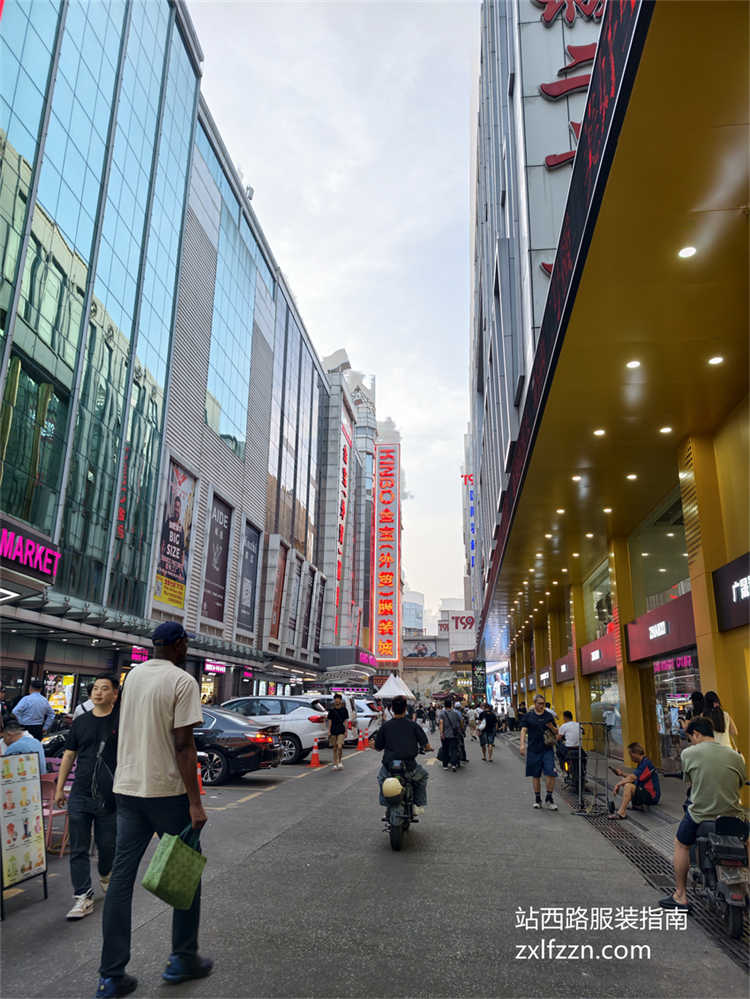
Why I Tell My Overseas Clients to Skip Retail at Guangzhou Station West
I have been standing in the same spot of the Station West business district for over twenty years. From the dusty days when we only dealt with African and Southeast Asian traders to now, wher global buyers flood our corridors, I've seen it all. You are probably asking me: "Should I just walk into a shop and buy one piece?" Let me be honest with you as an old boss who has survived three decades of market shifts. The short answer is no. If you come here looking for retail prices or single-piece convenience, you are walking into a trap that will cost you more than you save.
The Myth of the Friendly Shopkeeper
When you first step into Guangzhou Station West clothing markets like Baoguo or Jinbao, the atmosphere feels chaotic but welcoming. You see a sign saying "Wholesale" but also "Retail Welcome." This is the first lie. In my experience, the moment you ask for a single piece, the price jumps 30% to 50%. Why? Because the supply chain here is built on volume. A typical stall owner needs to move 500 pieces of a specific style to cover their rent and labor costs for the month. Selling you one shirt breaks their flow.
I remember a client from Brazil last year who wanted to test a new design. He walked into a stall in the Jinbao Foreign Trade building and asked for two samples. The owner quoted him $15 per piece. Later, he found out that if he bought 50 pieces, the price would dro to $4.50. That is not just a markup; that is a penalty for breaking the wholesale rule. The real value of Station West foreign trade lies in the bulk order structure, not the individual transaction.
The Reality of Sourcing: How We Actually Operate
To get the best deals, you need to understand the rhythm of the floor. It is not like shopping in a mall wher you browse and pay. It is a negotiation game played in seconds. When I guide my overseas partners, I tell them to forget about "retail" entirely. Instead, focus on "sample sourcing" followed by "bulk /confirm/iation."
Navigating the Labyrinth of Jinbao and Baoguo
Let's talk about the specific locations. If you are looking for high-quality Jinbao foreign trade goods, head to the Jinbao International Building. This place is famous for its mix of domestic designs and export leftovers. However, do not expect to find a counter labeled "Retail." You must go to the specific floors wher the heavy hitters are. For example, on the 3rd floor of Jinbao, there are several stalls specializing in men's casual wear that cater to US and European brands. They don't display prices. You have to ask, "What is your MOQ (Minimum Order Quantity)?"
If you insist on buying one piece, they might give you a "sample fee" which is often higher than the production cost. But here is the trick: if you tell them you are planning a large order next month, they will often sell you the sample at cost price. I once helped a buyer from Germany secure a sample of a denim jacket for $8 instead of the standard $25 sample fee, simply by showing him my business card and discussing his upcoming container order. That is how you play the game.
The Art of Inspection and Negotiation
One of the biggest mistakes foreign buyers make is assuming the fabric looks good on the hanger. In Guangzhou Station West clothing, quality varies wildly even within the same factory. I always advise clients to bring a magnifying glass and a light source. Check the stitching density, the thread tension, and the label placement. At the Baoguo Market, I have seen stalls selling "export grade" clothes that were actually rejected by local factories due to minor defects. These are sold cheaply to unsuspecting tourists.
When negotiating, never show too much excitement. If you say, "I love this design," the price goes up immediately. Keep your face neutral. Ask about the lead time, the payment terms, and the shipping options. A common tactic I use is to mention that I am comparing quotes from five different stalls. This usually brings the price down by another 5-10%. Remember, these bosses know the market better than anyone. They will smell desperation from a mile away.
Practical Pitfalls and Real Data
Let's look at some hard numbers. In my warehouse, I track the pricing trends daily. For a basic cotton t-shirt:
- Retail Price (Single Piece): $12 - $15
- Sample Price (MOQ 10+): $6 - $7
- Wholesale Price (MOQ 100+): $3.50 - $4.00
As you can see, the difference between retail and wholesale is massive. If you are a startup trying to build a brand, buying retail here will kill your profit margin before you even ship the goods. You need to calculate your landed cost, including shipping and duties. Buying at $15 means you cannot compete with Amazon sellers. Buying at $3.50 allows you to price competitively while maintaining healthy margins.
My Personal "Don't Do This" List
Over the years, I have seen many buyers fail because they ignored the unwritten rules. Here are my top three warnings:
- Don't trust the "Factory Direct" signs without proof. Many stalls in Station West claim to be factories, but they are just middlemen. Always ask for their factory address and visit if possible. I know a stall on the 2nd floor of Baoguo that claims to be a factory but actually sources from nearby villages. Their quality control is non-existent.
- Don't pay via personal WeChat accounts. Always use a company account or a verified trade assurance platform. I had a client lose $5,000 because he paid a supplier directly via WeChat transfer, and the supplier disappeared after receiving the money. This happens more often than you think in the rush of the market.
- Don't ignore the "Hidden Costs". Some stalls offer low prices but charge extra for packaging, labeling, or sorting. Before signing any deal, ask for a detailed breakdown of all costs. I once negotiated a deal wher the final price was 20% higher than expected because of hidden sorting fees.
Conclusion: Your Strategy for Success
So, should you retail at Guangzhou Station West? Absolutely not, unless you are just a tourist looking for souvenirs. If you are a serious buyer, treat this market as a strategic hub for bulk sourcing. Use the physical presence to inspect quality, negotiate terms, and build relationships. The real power of Guangzhou Station West clothing lies in its ability to produce and distribute massive volumes quickly. By skipping the retail mindset and focusing on wholesale strategies, you unlock the true potential of this legendary market.
Remember, the best deals are not found on the shelves; they are found in the conversations behind the counters. Come prepared, stay sharp, and let the volume speak for itself.





 On-site Visits
 Free Sharing
 Avoid Scams
 Updated Frequently
 For Reference Only