

Why Guangzhou's Fuguang Street is the Hidden Gem for Your Next Clothing Order
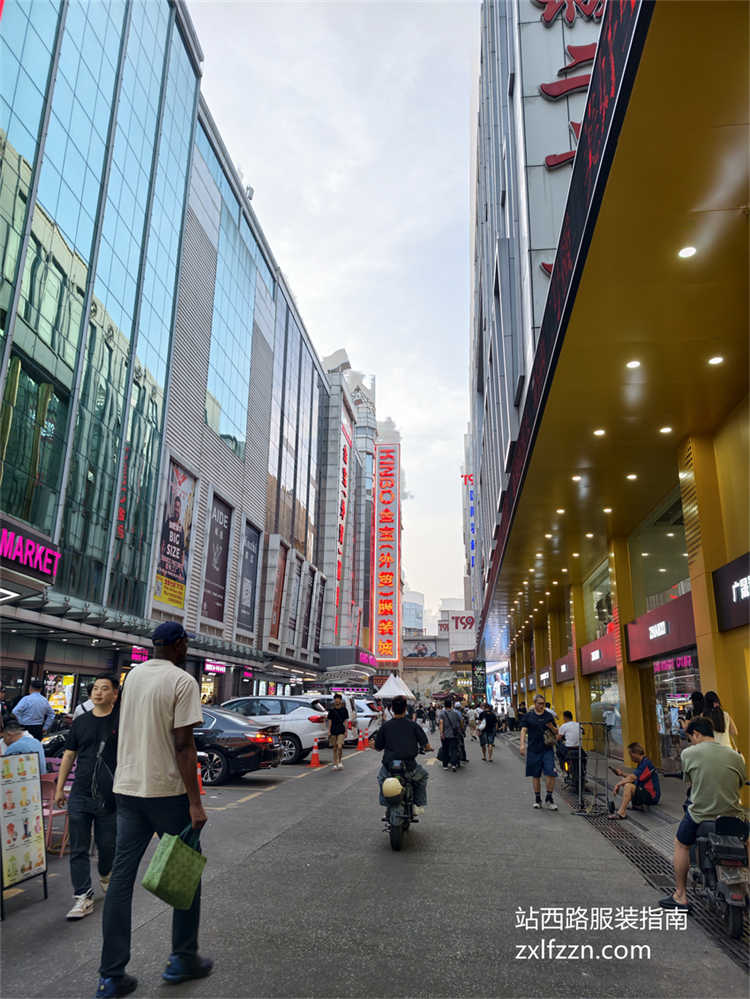
I've been standing in the same spot at the Station West market for over fifteen years. While everyone else is screaming about the big malls and the fancy showrooms, I'm here on Fuguang Street, right off Nanyuan Road, watching the real action happen. If you are an overseas buyer thinking that Guangzhou Station West clothing is just a chaotic mess of cheap knockoffs, you need to rethink your strategy immediately. This narrow one-way street is wher the serious money moves, wher the "Zhanxi Foreign Trade" (站西外贸) actually lives, and wher the quality jumps from factory seconds to boutique-ready pieces.
The One-Way Rule: Why It Matters for Buyers
First things first, let's talk about the traffic. Fuguang Street is a strict one-way line running parallel to Nanyuan Road. For a foreigner driving or taking a taxi, this can be confusing if you aren't warned. But for us locals, it's a feature, not a bug. The one-way flow forces a steady stream of delivery trucks and private cars carrying heavy garment bags directly into the heart of the wholesale zone. When you walk down Fuguang Street, you aren't just walking; you are following the pulse of the supply chain. You see the trucks unloading fresh stock from Dongguan factories while the shop owners are already counting cash. This constant motion means the inventory here turns over faster than anywher else in China. If you want the latest trends before they hit the US or European markets, you have to be here when the sun comes up.
Navigating the Real Wholesale Scene: Beyond the Showroom
Most buyers make the mistake of looking for a "storefront." On Fuguang Street, there are no glass doors with neon signs. The real deals are tucked away in narrow alleyways behind the main road. This is wher the "Jinbao Foreign Trade" (金宝外贸) ecosystem thrives. Jinbao isn't just a building; it's a network of warehouses and small workshops connected by these backstreets. When I tell my international clients to go to Jinbao, I don't mean the front lobby. I mean the side streets wher the fabric samples are stacked three feet high.
How to Spot the Real Factories vs. Middlemen
Here is a trick I learned the hard way. In the beginning, I wasted thousands of dollars buying from middlemen who claimed to be factory owners. They would take you to a nice office, show you a catalog, and charge you retail prices disguised as wholesale. On Fuguang Street, the real factories look different. They smell like cotton dust and ironing steam. You will see sewing machines humming in the back room, and workers cutting patterns on long tables. If a shop owner refuses to let you see the production floor, walk away. I once visited a stall that looked perfect until I asked to see their recent batch of "Station West clothing." They hesitated. That hesitation cost me $500 in bad stock. The real vendors? They brag about their defects because they know how to fix them. They say, "This batch has 5% loose threads, but we fix it before shipping." That honesty is gold.
Hands-On Sourcing: My Step-by-Step Field Guide
Let's get practical. How do you actually buy without getting ripped off? I break it down into four steps every time I send a new client out.
Step 1: The Morning Rush and Sample Inspection
Arrive between 7:00 AM and 8:30 AM. This is when the new stock arrives from the night shift. Do not look at the racks on the front; those are the "display only" items. Ask the vendor, "Wher is the new batch?" Usually, they will lead you to a corner or a back room. Here, you inspect the fabric weight, the stitching density, and the zipper quality. I always bring a small scale. A standard T-shirt should weigh around 180gsm. If it feels like tissue paper, it won't hold up in the US wash cycle. I compare the fabric against a sample I brought from home. If the color is slightly off, negotiate immediately. Don't wait until the bulk order is made.
Step 2: Negotiating MOQ and Pricing
This is wher most foreigners fail. They ask for "one piece" pricing. On Fuguang Street, the price drops drastically after 50 pieces. Let me give you a real example. A basic polo shirt might sell for $4.50 per unit for 10 pieces. But if you order 500 units, the price drops to $2.80. However, if you try to order 500 units of a design that hasn't sold yet, the vendor will push back. They want to minimize risk. My advice? Start with a "test run" of 100 pieces. Tell them, "I will place a second order of 500 if this batch sells well." Most vendors on Fuguang Street will agree to this because they know the turnover rate here is high. They prefer volume over margin on a single deal.
Step 3: Quality Control Before Payment
Never pay 100% upfront unless you trust the vendor for years. Even then, I recommend a 30% deposit and 70% after inspection. When the goods are ready, I go to the warehouse. I check 10% of the random samples. I pull the seams, I stretch the fabric, I check the labels. If I find a defect rate higher than 2%, I reject the shipment. I had a client who paid full price for a shipment of jeans. When they arrived in London, 15% were torn at the hem. The vendor on Fuguang Street refused to refund because the contract said "quality within industry standards." That's why you need to inspect before the final payment. It saves you thousands.
Common Pitfalls and How to Avoid Them
There are traps everywher in the Station West area. The biggest one is the "fake brand" trap. Vendors will show you shirts with logos that look exactly like Nike or Adidas. They will whisper, "We can make anything." But if you import these into the US or EU, customs will seize your cargo, and you could face legal fines. I strictly advise against buying counterfeit goods. Instead, focus on "OEM" (Original Equipment Manufacturer) services. Ask the vendor, "Can we put our own label on this?" Many factories on Fuguang Street specialize in OEM. They have the capacity to print your logo, sew your tags, and pack your boxes according to your specifications. This is the future of "Zhanxi Foreign Trade."
The Language Barrier Solution
You don't need to speak Mandarin to succeed here. I use a simple app called WeChat. Most vendors have a QR code for their WeChat account. You can send photos of the items you want, and they reply with videos showing the details. It's much faster than trying to explain measurements in broken Chinese. Also, bring a local translator if you are unsure. I often work with a young guy named Ah Ming who knows the dialects of every vendor on Fuguang Street. He translates the slang and the hidden meanings. For instance, when a vendor says "no problem," it might mean "we can do it, but it will cost extra." Ah Ming helps me decode that.
Summary of Key Insights for Overseas Buyers
| Aspect | What Beginners Think | What I Know (The Reality) |
|---|---|---|
| Pricing | Fixed prices on tags | Flexible negotiation based on volume and relationship |
| Location | Main roads and malls | Back alleys of Fuguang Street and Jinbao complex |
| Quality | High quality = High price | High quality = Honest communication about defects |
| MOQ | Must order 1000+ units | Start with 50-100 units for testing |
| Payment | Pay 100% upfront | 30% deposit, 70% after on-site inspection |
Walking down Fuguang Street is not just about buying clothes; it's about understanding the rhythm of the global fashion trade. The energy here is electric, the prices are competitive, and the opportunities are endless if you know wher to look. Whether you are sourcing "Guangzhou Station West clothing" for your boutique or building a large-scale distribution network, this street offers the raw materials you need. Don't be afraid to get your hands dirty, ask questions, and build relationships. The vendors here respect persistence and honesty. So, next time you plan a trip to Guangzhou, skip the tourist spots and head straight to Nanyuan Road. Find Fuguang Street, step into the noise, and start building your business the old-fashioned way.



 On-site Visits
 Free Sharing
 Avoid Scams
 Updated Frequently
 For Reference Only