

Real Talk: What It Actually Costs to Rent a Stall in Guangzhou Station West
Listen, I've been standing on the cracked concrete floors of the Station West area since before the subway lines even reached here. You see the glossy brochures online claiming "low rent" and "easy entry," but let me tell you, if you walk into this market without knowing the real numbers, you will get eaten alive. The question isn't just "how much is the rent?" It's "what are you actually paying for?" because in Station West, the price tag on the door tells you nothing about the profit margin inside.
I'm talking about the real, dirty, cash-heavy reality of the Guangzhou Station West clothing wholesale district. When foreign buyers ask me about rental costs, they usually expect a single number like $500 or $1,000. That's naive. In the world of Guangzhou Station West clothing, rent is a sliding scale based on your location, your floor, your brand reputation, and whether you are selling domestic fashion or high-end Station West foreign trade goods. Let's break down the actual numbers so you don't walk in blind.
The Price of Location: Ground Floor vs. Upper Floors
If you want a stall on the ground floor of the main buildings like the Baolong Plaza or the Jinbao International Trade Center, you are looking at a premium. We aren't talking about cheap student prices here. A decent-sized booth (about 4x6 meters) on the ground floor can easily run you between 8,000 to 15,000 RMB per month. That's roughly $1,100 to $2,100 USD. But here is the catch: that rent includes the foot traffic. If you are selling fast-fashion items targeting tourists or small boutique owners walking by, you need that visibility.
However, most serious wholesalers know the secret: go up. Head to the 3rd or 4th floor. The rent dros significantly, often to 3,000 to 5,000 RMB ($400-$700 USD). Why? Because the stairs scare away the casual browsers. But if you have a steady stream of repeat customers or you are part of a supply chain for Jinbao foreign trade, you don't need the street-level hype. I remember when I first started, I rented a spot on the 5th floor of a building near the railway station. My rent was only 2,500 RMB. I had to work harder to get people to find me, but my profit margins were double those of the ground-floor guys because my overhead was so low.
The Hidden Costs: Deposits and Management Fees
Before you even think about signing a lease, you need to understand the deposit structure. In Station West, it is almost always "pay three, deposit one." So, if the monthly rent is 5,000 RMB, you need to hand over 20,000 RMB upfront just to open the door. Plus, there is the management fee. Every building charges a daily or monthly service fee for security, cleaning, and electricity. This can add another 500 to 1,000 RMB to your monthly burn rate. Don't forget the renovation cost. Many stalls come empty. You need to build the display racks, install the lighting, and put up the signage. I spent about 15,000 RMB just on basic fixtures for my first shop. That is capital you cannot ignore.
Navigating the Market: How to Find the Right Spot Without Getting Scammed
When I guide international buyers through the maze of Guangzhou Station West clothing, the biggest mistake they make is trusting the agent on the phone. Agents love to show you the "best" spots, which are usually the ones nobody wants. You need to be on the ground. Walk the corridors. Look at the foot traffic. Count how many people stop at each stall. If a stall looks empty all day, the rent might be too high for the volume they generate, or the location is simply dead.
Identifying the Best Zones for Your Product
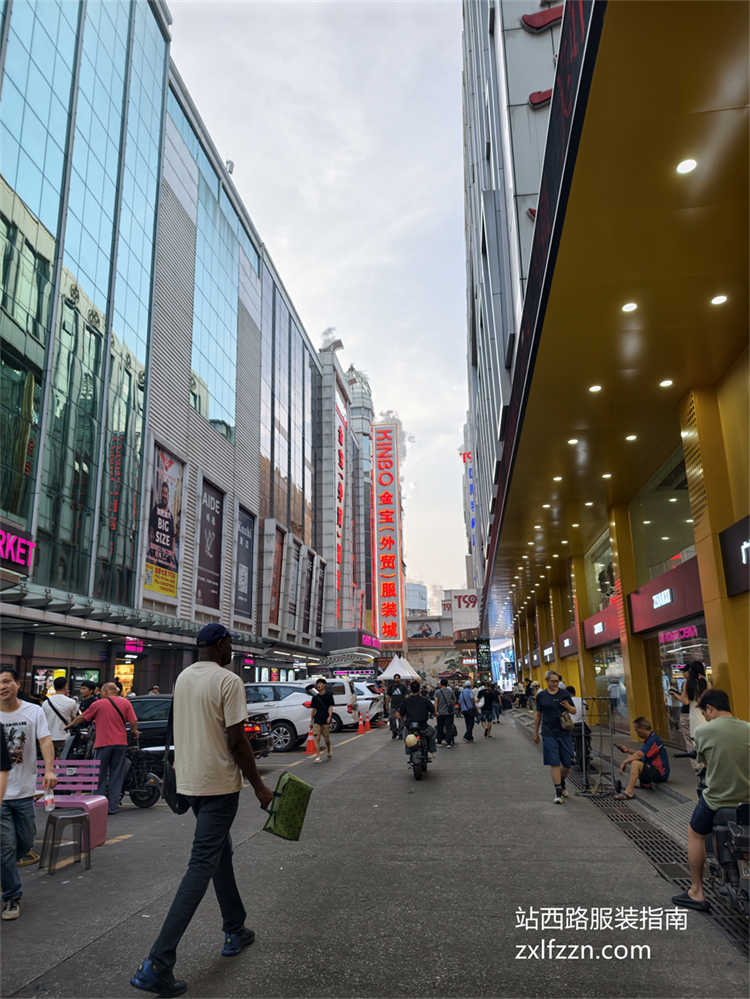
Different buildings specialize in different things. If you are looking for high-quality Station West foreign trade exports, head towards the Jinbao International Trade Center. This place is packed with vendors who deal in European and American sizing, not just the standard Asian fits. The rent here is higher, but the quality control is better. On the other hand, if you are looking for ultra-cheap, fast-turnover items, the older buildings around the railway station offer lower rents but require more patience in negotiating quality.
I once helped a buyer from Brazil who wanted to source denim jackets. He tried to rent a stall in a generic mall, but he ended up wasting two weeks. I took him straight to the specific corridor in the Jinbao center wher the denim specialists cluster. The rent was slightly higher, but the turnover was instant. He sold out his initial order in three days. Location specificity matters more than absolute price.
Sample Inspection and Negotiation Tactics
once you find a potential stall, do not sign anything immediately. Ask to see the inventory of the current tenant. Are they holding old stock? Is the fabric quality consistent? In the Jinbao foreign trade sector, I've seen tenants sublet their stalls to others just to clear out bad inventory. Always verify the owner's identity. Never pay a deposit to a middleman unless you have a contract verified by a local lawyer. I learned this the hard way when a friend lost 30,000 RMB because the person he paid was just a broker, not the landlord.
When negotiating the rent, use the off-season as leverage. The best time to rent is during Chinese New Year or right after the summer peak when everyone is tired. Landlords are desperate then. I managed to get a 20% discount on my last renewal by timing my negotiation perfectly. Also, ask for a "grace period" for renovation. Most landlords will give you 15 to 30 days free while you set up your shop. Do not skip this; it saves you money.
My Personal Experience: Lessons Learned from the Trenches
Let me share a story about a specific pitfall. A few years ago, a new vendor came to me wanting to rent a spot next to a famous brand. The rent was 12,000 RMB. He thought being close to the big name would bring him customers. He was wrong. The big brand had its own loyal following, and the new guy just became invisible. He quit after six months. The lesson? Don't rent based on proximity to a competitor unless you have a unique product. Sometimes, renting a spot further away in a quieter corner allows you to build your own niche without direct pressure.
Another critical point is the electricity bill. In some older buildings in Station West, the electricity meter is shared or charged at a commercial rate that is triple the residential rate. I once saw a stall owner lose half his profit just because he didn't check the utility contract. Always ask for the exact electricity rate per kilowatt-hour before signing.
Specific Recommendations for Foreign Buyers
If you are serious about sourcing, here are the specific areas I recommend based on my years of experience:
- Jinbao International Trade Center: Best for high-quality Station West foreign trade goods. Expect rents of 6,000-10,000 RMB/month for good spots. Focus on floors 2-4.
- Baolong Plaza: Great for mixed fashion and accessories. Slightly cheaper, around 4,000-7,000 RMB/month. Good for mid-range buyers.
- Railway Station Area (Old Buildings): Cheapest option, 2,000-4,000 RMB/month. High risk, high reward. only for experienced buyers who can handle quality variability.
Summary Table: Cost Breakdown for a Standard Stall
| Cost Item | Low-End (Upper Floor) | Mid-Range (Ground Floor) | Premium (Jinbao/Prime) |
|---|---|---|---|
| Monthly Rent (RMB) | 2,500 - 4,000 | 6,000 - 9,000 | 10,000 - 15,000+ |
| Deposit (Months) | 3 Months | 3 Months | 3 Months |
| Management Fee (Monthly) | 300 - 500 | 600 - 800 | 1,000 - 1,500 |
| Renovation Estimate | 5,000 - 8,000 | 10,000 - 15,000 | 20,000+ |
| Electricity Rate | Commercial (High) | Commercial (Standard) | Commercial (Premium) |
Remember, the goal of renting a stall in Guangzhou Station West clothing is not just to have a space; it is to have a hub for your business. The rent is just the entry fee. The real value comes from the connections you make, the suppliers you find, and the speed at which you can move your goods. Don't be afraid to walk away from a deal if the numbers don't add up. There are always other stalls, and the market is huge. Take your time, do your homework, and trust your gut. That is how you survive and thrive in this competitive arena.




 On-site Visits
 Free Sharing
 Avoid Scams
 Updated Frequently
 For Reference Only